Welcome to Greensun Solar Energy, please call
+86 187 1510 8506
for help
 English
 français
 español
 العربية
The Iranian conflict has disrupted global energy supplies, making electricity both expensive and unreliable. Energy storage can address these problems, creating a "crisis with opportunity" logic that extends from short-term emergency response to long-term industrial upgrading.
First, energy transportation is disrupted, directly doubling electricity costs. The Strait of Hormuz is the global energy lifeline, carrying one-fifth of the world's oil and one-fifth of its liquefied natural gas. If the Iranian conflict escalates, this passage could be blocked at any time, reducing oil and gas supplies and causing prices to skyrocket. This will trigger a chain reaction: electricity generated from oil and natural gas, which normally costs only a few cents per kilowatt-hour, now costs over 2.5RMB, while solar power with storage costs less than 30 cents per kilowatt-hour, making it significantly more cost-effective. Whether it's Europe, which relies on imported natural gas, or Middle Eastern countries, they must proactively switch to cheaper and more stable solar power with storage, as no one wants to overpay for electricity.
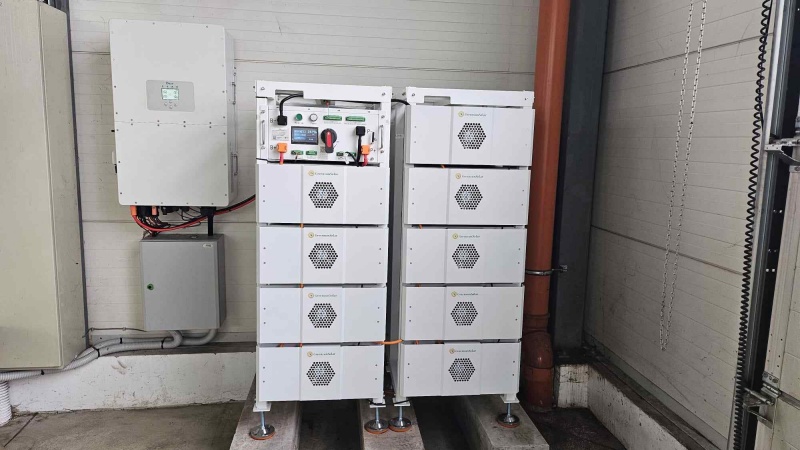
Second, the power grid becomes more vulnerable, making "backup power" a necessity. Iran's power grid is already quite old, and during conflicts, power plants and substations are likely to be targeted, leading to frequent power outages. During peak summer electricity demand, nearly one-third of the demand cannot be met. In this situation, people no longer dare to rely solely on a centralized power grid—that is, a large power plant supplying the entire city—and instead prefer "distributed power supply + energy storage." For example, installing a solar panel in a residential area, along with a large energy storage device, ensures that even if the main power grid fails, homes, hospitals, factories, and communication base stations—areas where power outages are unavoidable—can still be powered. This model has also made Saudi Arabia, the UAE, and other Middle Eastern countries realize that energy storage is key to ensuring energy security.
Finally, countries are eager to address their shortcomings, and policies are forcing the accelerated development of energy storage. The conflict has alarmed countries, making them realize the importance of energy security and prompting them to accelerate the construction of energy storage systems. Iran has clearly stated its intention to build energy storage facilities capable of storing 3 million kilowatt-hours of electricity by March 2026, with further expansion planned before summer. Saudi Arabia, the UAE, and other Middle Eastern countries have also accelerated their planned energy storage projects, aiming to build more large-scale energy storage facilities by 2030. More importantly, China and Iran are also cooperating, with Iran exchanging crude oil for Chinese photovoltaic and energy storage equipment. This not only solves Iran's equipment shortage problem but also brings tangible opportunities to Chinese energy storage companies, creating a win-win situation.



 IPv6 network supported